

The way people discover businesses has fundamentally changed. Traditional search engines are no longer the only gateway to online visibility. In 2026, millions of users ask AI assistants instead of typing keywords into a search box. Whether it’s ChatGPT, Google AI Overviews, Gemini, Microsoft Copilot, or Perplexity AI, customers increasingly expect instant, conversational answers rather than pages of blue links.
This shift creates a new challenge for businesses.
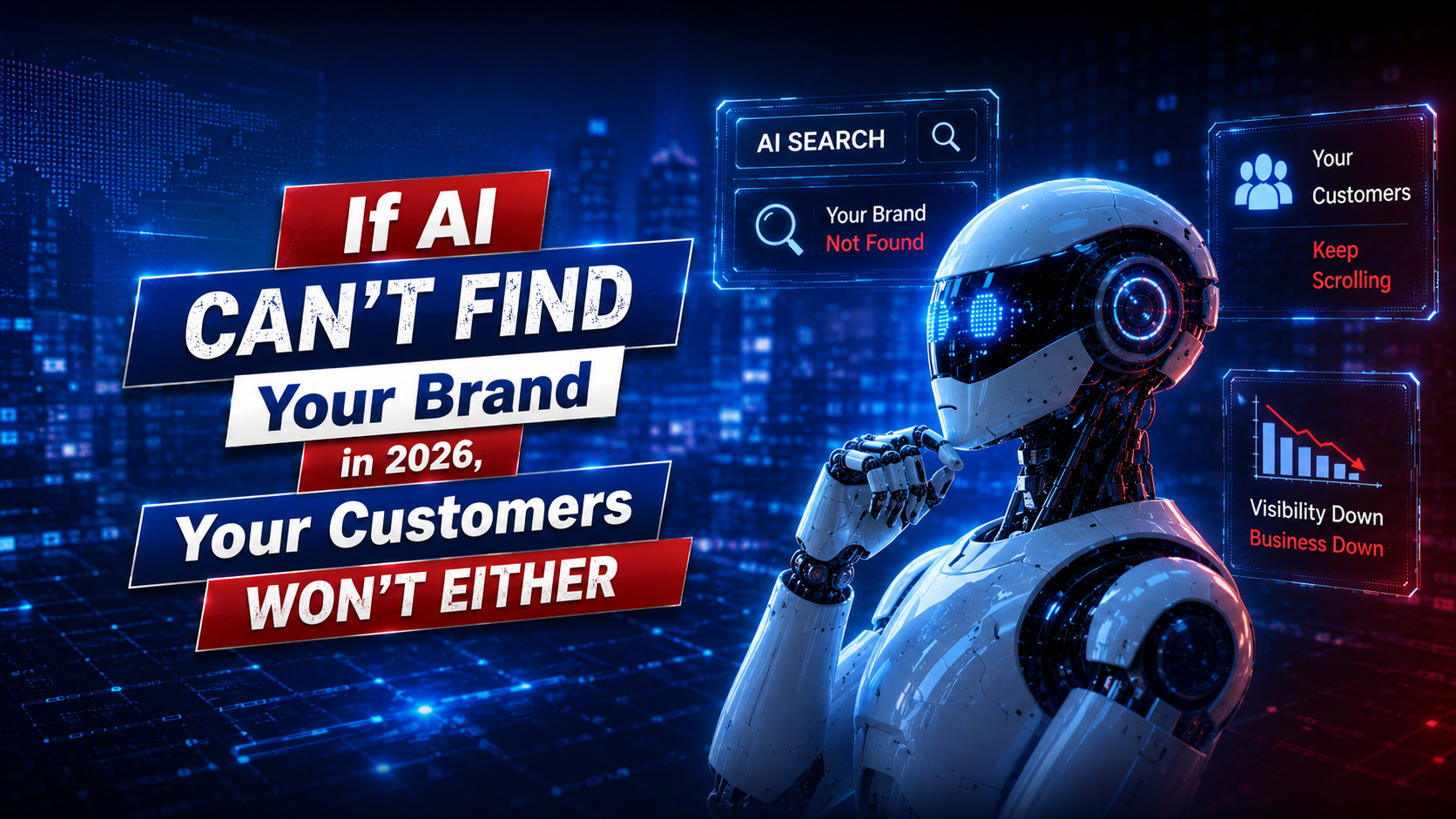
If artificial intelligence cannot recognize, understand, and confidently recommend your brand, your potential customers may never discover you—regardless of how attractive your website looks or how much you spend on advertising.
At DMT Lahore, we help businesses adapt to this new search ecosystem through advanced SEO, technical optimization, AI content strategies, and digital authority building.
The Evolution of Search
Search has evolved through several major phases.
Phase 1: Directory Search
Early websites depended on manually submitted directories.
Businesses competed simply by being listed.
Phase 2: Keyword Search
Google transformed search by ranking pages according to:
- Keywords
- Backlinks
- Relevance
- User experience
SEO became the primary digital marketing strategy.
Phase 3: Semantic Search
Search engines began understanding:
- Search intent
- User behavior
- Context
- Entities
- Natural language
Instead of matching keywords, search engines started understanding meaning.
Phase 4: AI Answer Engines
Today AI models generate answers instead of displaying ten search results.
Instead of asking:
Best digital marketing agency Lahore
Users ask:
Which agency in Lahore has expertise in Technical SEO, Google Ads, AI SEO, and local business growth?
The AI generates a recommendation.
If your business is absent from the AI’s trusted knowledge graph, you simply won’t appear.
AI Is Becoming the New Homepage
Many businesses still optimize exclusively for Google rankings.
However, customers increasingly discover businesses through AI platforms including:
- ChatGPT
- Google AI Mode
- Google AI Overviews
- Microsoft Copilot
- Gemini
- Claude
- Perplexity
Instead of clicking multiple websites, users trust summarized AI responses.
That means your first impression may no longer be your homepage.
It may be an AI-generated recommendation.
How AI Finds Brands
Unlike traditional search engines, AI systems don’t rely on one ranking factor.
They evaluate signals from multiple sources simultaneously.
These include:
- Website Structure
AI prefers websites with:
- Clean HTML
- Semantic markup
- Structured headings
- Internal linking
- Schema markup
- Crawlable architecture
Poor technical SEO reduces AI understanding.
- Entity Recognition
Google increasingly recognizes businesses as entities rather than collections of keywords.
An entity includes:
- Company name
- Services
- Founder
- Location
- Industry
- Contact information
- Reviews
- Brand mentions
When these signals remain consistent across the internet, AI develops confidence in your business.
- Structured Data
Schema markup acts as a translation layer between your website and AI systems.
Important schema includes:
- Organization
- LocalBusiness
- Service
- FAQ
- Article
- Review
- Breadcrumb
- Person
- Product
Without structured data, AI must guess.
With schema, AI understands.
- Topical Authority
Publishing one article about SEO no longer creates authority.
AI evaluates entire topical ecosystems.
For example, an agency offering SEO services should also publish content on:
- Technical SEO
- Local SEO
- AI SEO
- E-commerce SEO
- Schema
- Search Console
- Website speed
- Content optimization
- Google Business Profile
- Digital marketing strategy
Topical completeness increases AI trust.
- Brand Mentions
AI values external validation.
Mentions across:
- News websites
- Business directories
- Industry blogs
- Social platforms
- Forums
- Educational websites
all strengthen brand authority.
Not every mention needs a backlink.
Consistent citations matter.
Why Traditional SEO Alone Is No Longer Enough
Many companies still focus only on:
- Keyword density
- Meta tags
- Backlinks
- Blog publishing
While these remain important, AI evaluates additional dimensions.
Modern optimization includes:
- Entity optimization
- Knowledge graph development
- Semantic relationships
- Brand authority
- Content depth
- Experience signals
- Machine-readable information
SEO has evolved into AI optimization.
The Rise of Generative Engine Optimization (GEO)
A new discipline has emerged:
Generative Engine Optimization (GEO).
Instead of optimizing for search rankings alone, GEO optimizes content to become part of AI-generated answers.
This requires:
- Context-rich content
- Expert-level explanations
- Clear structure
- Trustworthy references
- Strong brand authority
- High semantic relevance
Businesses ignoring GEO risk becoming invisible.
Technical SEO Is More Important Than Ever
AI systems crawl websites differently from human visitors.
Technical optimization directly affects discoverability.
Critical technical areas include:
Crawl Budget Optimization
Reduce duplicate pages.
Eliminate orphan pages.
Optimize robots.txt.
Create logical internal linking.
XML Sitemaps
Maintain:
- Article sitemap
- Image sitemap
- Video sitemap
- Service sitemap
AI crawlers rely on accurate site architecture.
Core Web Vitals
Fast websites improve:
- Crawl efficiency
- User experience
- Indexing
- AI accessibility
Performance metrics include:
- Largest Contentful Paint (LCP)
- Interaction to Next Paint (INP)
- Cumulative Layout Shift (CLS)
Structured Navigation
Avoid confusing navigation.
Maintain:
- Breadcrumbs
- Categories
- Service hubs
- Topic clusters
Hierarchical organization improves AI understanding.
Content Quality Is Now Measured Differently
In 2026, AI evaluates more than grammar.
High-quality content demonstrates:
Experience
Real-world examples.
Case studies.
Practical implementation.
Expertise
Technical explanations.
Industry terminology.
Advanced insights.
Authority
Consistent publishing.
External recognition.
Brand reputation.
Trust
Accurate information.
Transparent business details.
Verified contact information.
Clear policies.
Why Thin Content Is Disappearing
Thousands of businesses still publish:
- 500-word blogs
- AI-generated filler
- Duplicate articles
- Keyword-stuffed pages
Modern AI systems recognize shallow content immediately.
Instead, successful content provides:
- Complete topic coverage
- Original insights
- Industry expertise
- Supporting examples
- Practical solutions
Quality beats quantity.
Local Businesses Must Optimize for AI Too
Many business owners assume AI search only matters globally.
Actually, local search is becoming increasingly AI-driven.
Consider this query:
Recommend the best digital marketing agency in Lahore for Technical SEO and Google Ads.
AI evaluates:
- Website authority
- Reviews
- Local citations
- Content quality
- Business consistency
- Service expertise
Your Google Business Profile alone is no longer sufficient.
The Importance of Consistent Business Information
AI systems compare information across hundreds of sources.
Your business should maintain identical:
- Company name
- Address
- Phone number
- Website
- Service descriptions
Inconsistent information weakens AI confidence.
Knowledge Graph Optimization
Knowledge graphs organize entities and their relationships.
Google uses knowledge graphs to understand:
- Companies
- Products
- Services
- Locations
- People
Optimization strategies include:
- Organization schema
- Founder schema
- Social profile markup
- Wikidata references where appropriate
- Consistent citations
- Brand mentions
Strong knowledge graph signals improve AI recommendations.
AI Understands Context, Not Just Keywords
Old SEO:
Digital marketing Lahore
Modern AI:
Which agency has proven expertise in SEO, paid advertising, website optimization, AI search visibility, and technical implementation for Pakistani businesses?
The second question requires contextual understanding.
Your content should answer complete user problems—not isolated keywords.
Building Topical Authority Through Content Clusters
Instead of publishing random blogs, build interconnected topic clusters.
Example:
Main pillar:
Technical SEO Services
Supporting articles:
- Website crawling
- Indexation
- Canonicalization
- Schema markup
- XML sitemaps
- Page speed
- AI SEO
- Log file analysis
- Core Web Vitals
This architecture signals deep expertise.
AI Rewards Brand Reputation
AI doesn’t simply read websites.
It analyzes reputation.
Signals include:
- Customer reviews
- Industry recognition
- Citations
- Social engagement
- Expert contributions
- Speaking events
- Publications
- Partnerships
A trusted brand receives stronger AI confidence.
Common Mistakes Businesses Make
Many companies still:
- Publish duplicate AI content
- Ignore technical SEO
- Skip schema markup
- Neglect internal linking
- Use inconsistent business information
- Focus only on backlinks
- Ignore user experience
- Publish without topical planning
These mistakes reduce AI discoverability.
How DMT Lahore Helps Businesses Become AI-Visible
At DMT Lahore, our optimization strategies extend far beyond traditional SEO.
We focus on creating businesses that AI platforms can confidently understand, trust, and recommend.
Our services include:
- Advanced Technical SEO
- AI Search Optimization
- Generative Engine Optimization (GEO)
- Schema Markup Implementation
- Entity-Based SEO
- Content Cluster Strategy
- Local SEO
- Website Speed Optimization
- Digital PR Strategy
- Google Business Profile Optimization
- E-commerce SEO
- Website Audits
- AI-Friendly Content Development
Our approach combines data, technical expertise, and long-term authority building to help businesses across Lahore and Pakistan compete in an AI-first digital landscape.
The Future Belongs to AI-Discoverable Brands
Search behavior will continue evolving.
Customers increasingly expect immediate answers.
AI assistants are becoming trusted advisors.
Businesses that invest today in:
- Technical excellence
- High-quality content
- Structured data
- Brand authority
- Entity optimization
- Topical expertise
will dominate tomorrow’s search landscape.
Those relying solely on outdated SEO techniques risk becoming invisible—even if they have excellent products or services.
The brands that AI understands are the brands customers will find.
At DMT Lahore, we help businesses in Lahore and throughout Pakistan prepare for this transformation with future-focused SEO strategies, Generative Engine Optimization (GEO), technical SEO, and AI-ready content marketing. The future of search belongs to brands that machines can understand and people can trust. Now is the time to build that foundation.
Frequently Asked Questions (FAQs)
- What does it mean if AI cannot find my brand?
If AI platforms like ChatGPT, Google AI Overviews, or other answer engines cannot recognize or trust your business, they are less likely to mention or recommend your brand in AI-generated responses. This reduces your online visibility and can lead to fewer customer inquiries and conversions.
- What is Generative Engine Optimization (GEO)?
Generative Engine Optimization (GEO) is the process of optimizing your website, content, structured data, and brand authority so AI-powered search engines and assistants can understand, trust, and reference your business in their generated answers.
- How is AI SEO different from traditional SEO?
Traditional SEO focuses on improving rankings in search engine results pages using keywords, backlinks, and on-page optimization. AI SEO expands this by emphasizing entity recognition, structured data, topical authority, semantic relevance, technical excellence, and brand trust so AI systems can accurately interpret and recommend your business.
- Why is schema markup important for AI search?
Schema markup provides machine-readable information about your business, services, products, articles, and FAQs. It helps AI systems interpret your content correctly, improves entity recognition, and increases the likelihood of your information being used in AI-generated answers.
- How can DMT Lahore help my business become AI-ready?
DMT Lahore provides comprehensive AI-focused digital marketing solutions, including Technical SEO, Generative Engine Optimization (GEO), Local SEO, schema implementation, website performance optimization, content strategy, entity-based SEO, digital PR, and authority building to ensure your business remains discoverable in the AI-driven search landscape of 2026 and beyond.